Florida PDL Coverage and Rental Car Damage

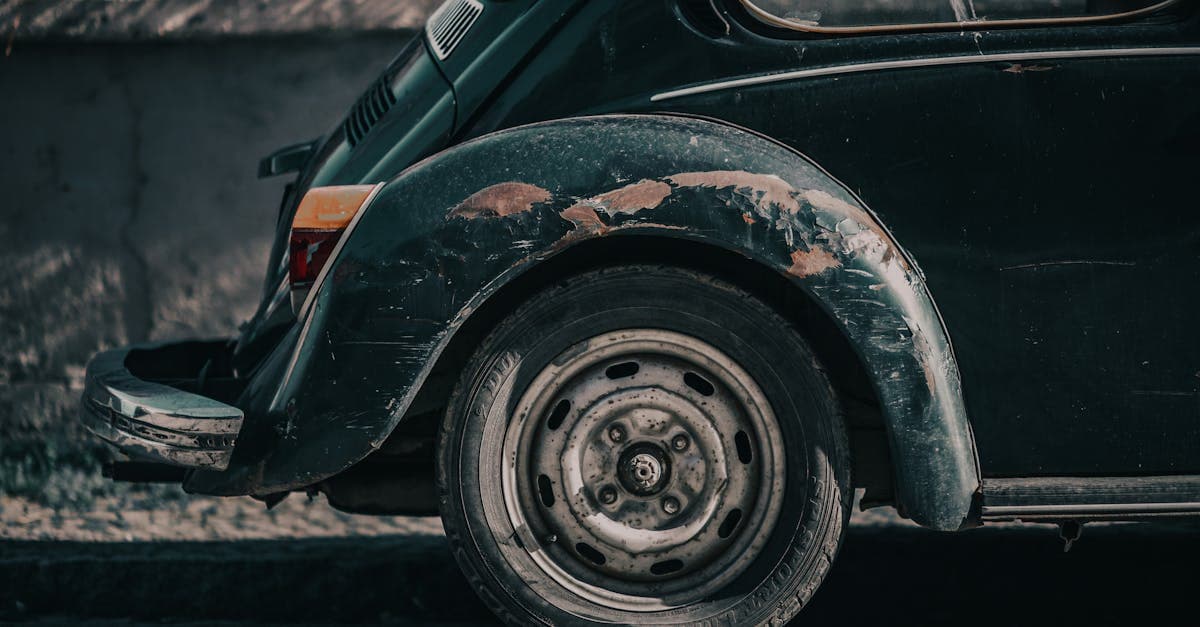
Think of Florida auto insurance as a two-sided shield. One side faces inward, protecting you and your passengers — that is PIP, your Personal Injury Protection. The other side faces outward, protecting other people's property from your actions — that is PDL, your Property Damage Liability coverage.
PDL is the firewall that blocks property damage liability from penetrating your personal financial network. It stands between your personal finances and the security breach that lets a single at-fault accident drain your financial reserves. Without it, every fender bender, every rear-end collision, and every loss of control that damages someone else's property becomes a direct withdrawal from your bank account.
The reason Florida requires PDL is simple: when you operate a vehicle, you create a risk of damaging other people's property. PDL ensures that at least some financial protection exists for the people whose property you damage. The problem is that Florida's minimum of $10,000 was set when that amount actually covered most property damage claims — and today it does not.
Understanding this dynamic is the key to making smart PDL decisions. The legal minimum keeps your registration valid. The coverage you actually need keeps your financial life intact. These are often very different numbers, and the gap between them represents your personal exposure every time you drive on Florida roads.
How Florida PDL Claims Are Filed and Processed
The statistics paint a clear picture. When you cause an at-fault accident in Florida that damages someone else's property, the PDL claims process begins. Understanding each step helps you manage the situation effectively and protect your interests throughout the process.
Step one — report the accident: Florida law requires you to report any accident involving injury, death, or property damage exceeding $500 to law enforcement. Exchange insurance information with the other driver, including your PDL policy details. File a police report, which becomes a critical document in the claims process.
Step two — notify your insurer: Contact your insurance company as soon as possible after the accident. Provide the basic facts: what happened, when, where, and who was involved. Your insurer assigns the claim a number and begins the investigation process.
Step three — the other party files a claim: The person whose property you damaged files a claim against your PDL coverage. They may file through their own insurer, who then pursues your PDL through subrogation, or they may file directly with your insurer as a third-party claim.
Step four — damage assessment: An adjuster evaluates the property damage. For vehicle damage, this involves an inspection and repair estimate. For structural damage, contractors may provide estimates. The adjuster determines the amount of the claim based on actual repair or replacement costs.
Step five — payment and resolution: Your insurer pays the claim up to your PDL limit. If the damage is within your limit, the claim resolves fully. If the damage exceeds your limit, the insurer pays the limit and you are responsible for the remainder. The damaged party can pursue you personally for any unpaid balance.
What Florida PDL Actually Covers
The statistics paint a clear picture. Florida PDL is the firewall that blocks property damage liability from penetrating your personal financial network. It pays for damage you cause to other people's property when you are at fault in an automobile accident. The scope of covered property is broader than most drivers realize.
Other vehicles: The most common PDL claim involves damage to another driver's vehicle. Whether you rear-end a sedan, sideswipe a pickup truck, or T-bone an SUV at an intersection, your PDL pays for the repair or replacement of the damaged vehicle up to your policy limit.
Buildings and structures: If you lose control and crash into a storefront, home, office building, or any other structure, PDL covers the structural damage. This includes walls, doors, windows, and any interior damage caused by the impact.
Fences, walls, and landscaping: Running into a neighbor's fence, a retaining wall, or a professionally landscaped yard creates a PDL claim. Mature trees and established landscaping can be surprisingly expensive to replace — a single large oak tree can cost $5,000 or more to replant.
Government property: Hitting a guardrail, traffic signal, street sign, utility pole, or fire hydrant creates a PDL claim against government-owned property. These items are expensive — a single traffic signal can cost $150,000 to $500,000 to replace. Even a basic guardrail section can cost several thousand dollars.
Other tangible property: PDL also covers damage to boats on trailers, outdoor equipment, parked motorcycles, and essentially any tangible property belonging to someone else that your vehicle damages in an accident.
Choosing the Right Florida PDL Limit
When we analyze the data, Selecting the right PDL limit is configuring your PDL coverage to defend against the full spectrum of property damage costs. The state minimum of $10,000 is a legal floor, not a recommendation. The right limit depends on your financial situation, the vehicles around you, and your tolerance for personal liability.
The asset protection approach: Carry enough PDL to protect your personal assets. If you own a home, have savings, or earn a wage that could be garnished, your PDL limit should be high enough to prevent a property damage judgment from threatening those assets. Financial advisors commonly recommend PDL limits of $50,000 to $100,000 for drivers with moderate assets.
The realistic damage approach: Look at the vehicles on your daily commute. If you frequently share the road with vehicles worth $30,000 to $60,000, your PDL limit should be high enough to cover a total loss to one of those vehicles. Remember that your limit must also cover damage to any structures, signs, or other property involved in the same accident.
The cost-benefit calculation: The premium difference between PDL limits is remarkably small relative to the coverage increase. Moving from $10,000 to $50,000 in PDL might cost an additional $50 to $100 per year. Moving to $100,000 might add another $20 to $40. For a few dollars per month, you gain tens of thousands in financial protection.
Umbrella policy consideration: If you have significant assets, consider pairing your auto PDL with a personal umbrella policy that provides additional liability coverage above your auto limits. Umbrella policies typically require minimum underlying PDL limits of $100,000 or more and provide $1 million or more in additional protection.
Annual review: Vehicle values and repair costs increase annually. Review your PDL limit each year to ensure it keeps pace with the realistic cost of property damage you might cause. A limit that seemed adequate two years ago may be insufficient today.
Florida PDL and Total Loss Scenarios
The statistics paint a clear picture. When you cause an accident that totals someone else's vehicle, your PDL limit faces its greatest test. Understanding how total loss claims work under Florida PDL helps you appreciate the financial exposure of inadequate coverage.
When total loss is declared: The other driver's vehicle is declared a total loss when repair costs exceed a threshold — typically 80 percent of the vehicle's actual cash value in Florida. At that point, the insurer pays the vehicle's value rather than repairing it.
Your PDL pays actual cash value: If you total someone's vehicle, your PDL pays the vehicle's actual cash value up to your policy limit. For a vehicle worth $25,000, your PDL pays $25,000 if your limit is high enough. If your PDL limit is $10,000, you pay $10,000 and the vehicle owner is $15,000 short.
The modern vehicle problem: The average new car price in Florida exceeds $40,000. Even three-year-old used vehicles average $20,000 to $30,000. Totaling any of these vehicles immediately exhausts a $10,000 PDL limit and creates a gap that becomes the at-fault driver's personal liability.
Additional costs beyond vehicle value: When you total someone's vehicle, the costs extend beyond the vehicle itself. The damaged party may claim loss of use — the cost of a rental car while they find a replacement. Sales tax on the replacement vehicle and registration fees may also be recoverable. These additional costs widen the gap between your PDL payment and total damages.
Diminished value considerations: Even if the vehicle is repaired rather than totaled, the owner may have a diminished value claim — the reduction in the vehicle's market value due to having been in an accident. Florida courts have recognized diminished value claims, adding another layer of potential liability beyond repair costs.
What Florida PDL Does Not Cover
When we analyze the data, Despite covering a wide range of property, Florida PDL has important exclusions that every driver must understand. Assuming PDL covers something it does not leads to denied claims and personal financial exposure.
Your own vehicle: PDL pays for damage to other people's property — never your own. If you cause an accident and your vehicle is damaged, you need collision coverage to pay for your repairs. Florida does not require collision coverage, so many drivers are unprotected on this front.
Bodily injuries: PDL covers property damage only. If you injure someone in an accident, PDL does not pay their medical bills, lost wages, or pain and suffering. Florida's no-fault PIP system handles some injury costs, but serious injuries may require Bodily Injury Liability coverage, which Florida does not mandate.
Your own injuries: Your personal injuries in an at-fault accident are not PDL's responsibility. Your PIP coverage handles up to $10,000 in medical expenses, and your health insurance covers the rest. PDL is exclusively about other people's property.
Intentional damage: If you deliberately damage someone's property with your vehicle, PDL does not cover the claim. Intentional acts are excluded from liability coverage, and the act itself may constitute a criminal offense.
Wear and tear or pre-existing damage: PDL pays for damage your accident caused — not damage that existed before the accident. If the other driver's vehicle already had a dented bumper, PDL does not pay to fix the pre-existing dent, only the new damage from your collision.
Florida PDL and Multi-Vehicle Accidents
The statistics paint a clear picture. Multi-vehicle accidents create some of the most challenging PDL coverage situations in Florida. Understanding how your single PDL limit applies across multiple damaged vehicles and properties is critical for assessing your true exposure.
Single limit, multiple claims: Your Florida PDL limit is a per-accident total — not a per-vehicle or per-property limit. If you cause a chain-reaction accident that damages three vehicles, your PDL limit is split among all three claims. A $10,000 limit divided among three damaged vehicles provides barely $3,333 each.
How insurers allocate the limit: When claims from a single accident exceed your PDL limit, your insurer typically distributes the available funds proportionally based on each claim's size. If one vehicle has $15,000 in damage and another has $5,000, and your limit is $10,000, the first vehicle receives approximately $7,500 and the second receives $2,500.
Chain reaction liability: In Florida, the driver who initiated the chain reaction is typically responsible for all resulting property damage. If you rear-end one vehicle and push it into a third, your PDL covers both the vehicle you hit and the vehicle pushed forward. This compounding effect makes adequate PDL limits essential.
Intersection multi-vehicle scenarios: Running a red light or failing to yield can cause multi-vehicle accidents where your single PDL limit must cover extensive damage. A T-bone collision that pushes the struck vehicle into oncoming traffic can produce total property damage of $50,000 or more across multiple vehicles.
Personal exposure in multi-vehicle accidents: The mathematical reality of multi-vehicle accidents is the strongest argument for carrying PDL limits well above the Florida minimum. A three-car accident with moderate damage to each vehicle can easily produce $30,000 to $45,000 in total property damage — three to four times the minimum limit.
How Florida PDL Claims Are Filed and Processed
The statistics paint a clear picture. When you cause an at-fault accident in Florida that damages someone else's property, the PDL claims process begins. Understanding each step helps you manage the situation effectively and protect your interests throughout the process.
Step one — report the accident: Florida law requires you to report any accident involving injury, death, or property damage exceeding $500 to law enforcement. Exchange insurance information with the other driver, including your PDL policy details. File a police report, which becomes a critical document in the claims process.
Step two — notify your insurer: Contact your insurance company as soon as possible after the accident. Provide the basic facts: what happened, when, where, and who was involved. Your insurer assigns the claim a number and begins the investigation process.
Step three — the other party files a claim: The person whose property you damaged files a claim against your PDL coverage. They may file through their own insurer, who then pursues your PDL through subrogation, or they may file directly with your insurer as a third-party claim.
Step four — damage assessment: An adjuster evaluates the property damage. For vehicle damage, this involves an inspection and repair estimate. For structural damage, contractors may provide estimates. The adjuster determines the amount of the claim based on actual repair or replacement costs.
Step five — payment and resolution: Your insurer pays the claim up to your PDL limit. If the damage is within your limit, the claim resolves fully. If the damage exceeds your limit, the insurer pays the limit and you are responsible for the remainder. The damaged party can pursue you personally for any unpaid balance.
Factors That Determine Your Florida PDL Premium
When we analyze the data, Your Florida PDL premium is influenced by a combination of personal, geographic, and policy factors. Understanding what drives your premium helps you find savings without sacrificing the coverage you need.
Driving record: Your history of at-fault accidents and traffic violations is the most significant factor. Drivers with clean records pay substantially less than those with recent at-fault accidents. A single at-fault property damage claim can increase your PDL premium by 20 to 40 percent for three to five years.
Location within Florida: Where you live and park significantly affects your premium. Urban areas like Miami, Orlando, Tampa, and Jacksonville have higher accident rates and consequently higher PDL premiums. Drivers in rural areas typically pay less because accident frequency is lower.
Age and experience: Younger drivers, particularly those under 25, pay higher PDL premiums due to their statistically higher accident rates. Premiums typically decrease as drivers gain experience and reach age brackets associated with lower claim frequency.
Vehicle type: The vehicle you drive affects your PDL premium because certain vehicles cause more property damage in accidents. Larger, heavier vehicles like trucks and SUVs tend to cause more damage to other vehicles and property, resulting in higher PDL premiums than smaller, lighter vehicles.
Coverage limit chosen: Higher PDL limits cost more, but the incremental cost is modest relative to the coverage increase. Moving from $10,000 to $50,000 in coverage does not multiply your premium by five — the increase is typically 15 to 30 percent because the probability of a claim reaching the higher limit decreases.
Take Action on Your Florida PDL Coverage Today
Understanding Florida PDL is only valuable if you act on that knowledge. Here is what to do right now.
First, pull out your auto insurance declarations page and confirm your PDL limit. If it shows $10,000, you almost certainly need to increase it. Call your agent or log into your account and get a quote for $50,000 and $100,000 limits — the premium increase will likely surprise you with how small it is.
Second, evaluate your total liability exposure. Look at the vehicles you share the road with daily. Consider the commercial properties and government infrastructure along your regular routes. Ask yourself whether your PDL limit could cover the most realistic worst-case property damage scenario.
Third, consider whether you need additional coverages that Florida does not require — collision, comprehensive, Bodily Injury Liability, and Uninsured Motorist coverage. Florida's two required coverages leave significant gaps that these optional coverages fill.
Florida PDL is configuring your PDL coverage to defend against the full spectrum of property damage costs. Getting the right limit protects your finances from a single moment of inattention on the road. Take fifteen minutes this week to review your PDL coverage. The cost of that time is nothing compared to the potential cost of being underinsured when an accident happens.
Continue reading

Coverage Limits Compared: How to Spot the Differences Between Insurance Quotes
Two quotes with identical premiums can have vastly different coverage limits. Knowing how to identify and compare these limits ensures you select the policy that actually protects your assets.
Why Your Policy Renewal Date Is the Perfect Time for a Checkup
Your annual renewal notice is a natural prompt to review your coverage. Using renewal as your checkup trigger ensures you never go more than twelve months without evaluating your protection.
Assignment of Benefits and Water Damage Claims: A Common Scenario
Water mitigation companies frequently ask homeowners to sign AOBs after pipe bursts and floods. Learn why water damage claims are the most common setting for AOB agreements.