NFIP Flood Insurance: The Federal Program That Fills Your Homeowners Gap

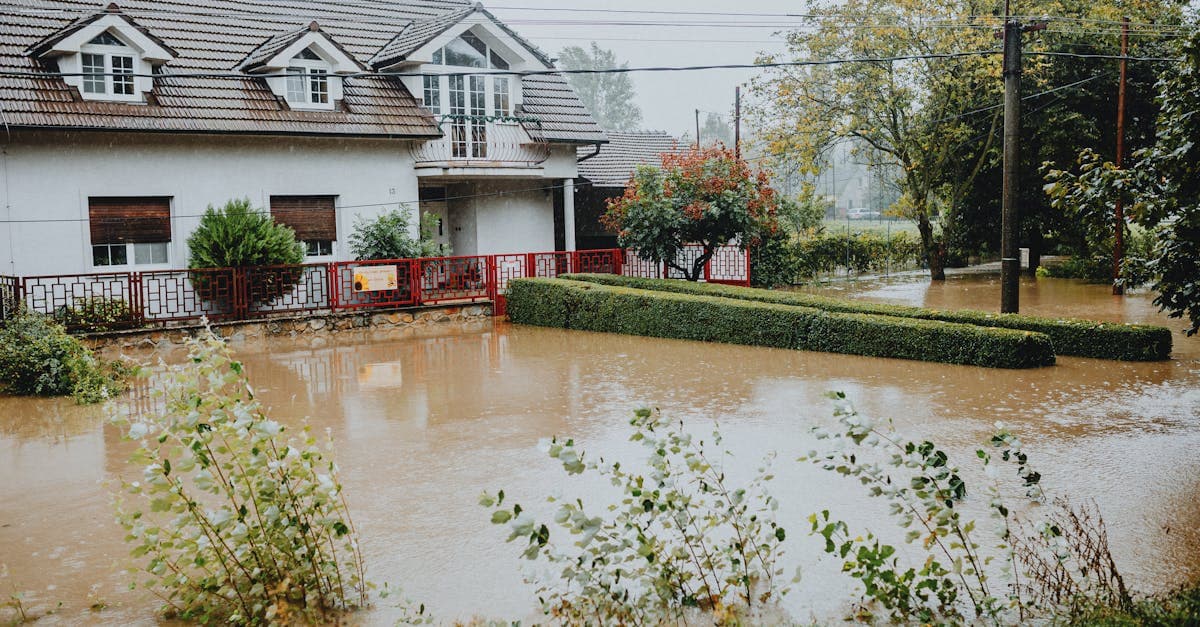
Think of your homeowners insurance as a security system that monitors for fire, burglary, and wind damage but has no sensors at ground level for water. It detects and responds to threats above the waterline — but when the threat comes from below, as rising floodwater, the system goes silent. Your alarm does not sound. Your protection does not activate. You are on your own.
Flood insurance is the firewall configured to block the specific attack vector that your operating system was never designed to handle on its own. It provides the ground-level detection and response your homeowners policy deliberately omits. Without it, your home faces the zero-day exploit in your coverage architecture that hackers of circumstance — storms, rising water, and overflowing drains — use to breach your financial defenses.
The analogy is precise because homeowners insurance genuinely does cover some water damage — just not the kind that comes from outside your home as rising water. A burst pipe that floods your kitchen? Covered. An overflowing washing machine? Covered. A water heater that ruptures? Covered. These are internal, accidental events that your policy is designed to handle.
But water that rises from the ground, flows across the surface, surges from the coast, or overflows from rivers and drains? Excluded. Completely, explicitly, and without exception. The same substance — water — triggers either full coverage or zero coverage depending entirely on where it came from and how it entered your home.
This distinction is not intuitive, which is why so many homeowners are surprised by claim denials after flooding. They see water damage and expect their insurance to respond. But the policy makes a critical distinction between water damage it covers and flood damage it excludes — and understanding that distinction is the key to protecting your home properly.
Basement Flooding: The Coverage Gap Within the Coverage Gap
When we analyze the data, Basement flooding represents a unique challenge because even flood insurance provides limited coverage for below-grade spaces. Understanding what is and is not covered in basements helps homeowners plan their protection strategy.
Homeowners insurance and basements: Your homeowners policy covers internal water damage in basements from burst pipes and appliance failures but excludes all flood damage below grade. A basement pipe burst is covered. Floodwater entering through foundation walls is not.
NFIP basement coverage limits: NFIP policies provide limited coverage for below-grade areas. Covered items include foundation walls, sump pumps, electrical outlets and switches on circuits, central air conditioning units, furnaces, water heaters, fuel tanks, and essential equipment. Finished improvements like drywall, paneling, carpet, and tile flooring below the lowest elevated floor are excluded.
The finished basement problem: If you have invested $30,000 to $50,000 in a finished basement with carpeting, drywall, built-in entertainment systems, and a kitchen — none of those improvements are covered by the NFIP flood policy. This creates a significant coverage gap for homeowners with below-grade living spaces.
Private flood insurance for basements: Some private flood insurers offer broader basement coverage than the NFIP, including coverage for finished improvements below grade. If you have a valuable finished basement, a private flood policy with basement coverage may provide substantially better protection.
Sewer backup coverage for basements: A sewer backup endorsement on your homeowners policy covers water that enters the basement through drains and sewer connections. This coverage may protect finished basement improvements that flood insurance does not cover, but only for water entering through the plumbing system.
The comprehensive basement strategy: Protecting a finished basement from water damage may require three coverages: flood insurance for structural elements and equipment, a sewer backup endorsement for drain-related water intrusion, and potentially a private flood policy with basement improvement coverage. No single policy covers all basement water damage scenarios.
The Flood Exclusion in Your Homeowners Policy: What It Says and What It Means
The statistics paint a clear picture. Every standard homeowners insurance policy contains language that excludes coverage for flood damage. Understanding exactly what this exclusion says helps you grasp the scope of what is not covered — because the zero-day exploit in your coverage architecture that hackers of circumstance — storms, rising water, and overflowing drains — use to breach your financial defenses.
The standard exclusion language: Your policy excludes damage caused by flood, typically defined as a general and temporary condition of partial or complete inundation of normally dry land areas from overflow of inland or tidal waters, unusual and rapid accumulation or runoff of surface waters from any source, or mudflow.
What triggers the exclusion: Any water that enters your home from outside as rising water activates the flood exclusion. This includes river overflow, storm surge, surface runoff from heavy rain, water that flows overland from any source, and mudflow — a river of liquid mud on the surface.
What the exclusion does not affect: Internal water damage from burst pipes, failed appliances, accidental overflows, and ice dam backup is generally covered under your homeowners policy. The critical distinction is the source: internal and accidental water events are covered; external rising water is excluded.
The universality of the exclusion: This exclusion appears in every standard homeowners policy form — HO-3, HO-5, HO-6, and others. No standard homeowners policy from any major insurer covers flood damage. The exclusion is industry-wide and has been standard for over 50 years.
The gray areas: Wind-driven rain that enters through storm damage to the roof or walls may be covered as wind damage. But once water rises from the ground and enters through doors, windows, or foundations, the flood exclusion applies regardless of what caused the water to rise.
The practical impact: When you file a claim for flood damage on your homeowners policy, the claim will be denied. The adjuster will document the damage, confirm it resulted from flooding as defined in the policy, and inform you that the exclusion applies. There is no appeal process that overrides the exclusion language.
Basement Flooding: The Coverage Gap Within the Coverage Gap
When we analyze the data, Basement flooding represents a unique challenge because even flood insurance provides limited coverage for below-grade spaces. Understanding what is and is not covered in basements helps homeowners plan their protection strategy.
Homeowners insurance and basements: Your homeowners policy covers internal water damage in basements from burst pipes and appliance failures but excludes all flood damage below grade. A basement pipe burst is covered. Floodwater entering through foundation walls is not.
NFIP basement coverage limits: NFIP policies provide limited coverage for below-grade areas. Covered items include foundation walls, sump pumps, electrical outlets and switches on circuits, central air conditioning units, furnaces, water heaters, fuel tanks, and essential equipment. Finished improvements like drywall, paneling, carpet, and tile flooring below the lowest elevated floor are excluded.
The finished basement problem: If you have invested $30,000 to $50,000 in a finished basement with carpeting, drywall, built-in entertainment systems, and a kitchen — none of those improvements are covered by the NFIP flood policy. This creates a significant coverage gap for homeowners with below-grade living spaces.
Private flood insurance for basements: Some private flood insurers offer broader basement coverage than the NFIP, including coverage for finished improvements below grade. If you have a valuable finished basement, a private flood policy with basement coverage may provide substantially better protection.
Sewer backup coverage for basements: A sewer backup endorsement on your homeowners policy covers water that enters the basement through drains and sewer connections. This coverage may protect finished basement improvements that flood insurance does not cover, but only for water entering through the plumbing system.
The comprehensive basement strategy: Protecting a finished basement from water damage may require three coverages: flood insurance for structural elements and equipment, a sewer backup endorsement for drain-related water intrusion, and potentially a private flood policy with basement improvement coverage. No single policy covers all basement water damage scenarios.
Excess Flood Insurance: Coverage Beyond NFIP Limits
The statistics paint a clear picture. The NFIP caps residential building coverage at $250,000 and contents coverage at $100,000. For homeowners whose property value exceeds these limits, excess flood insurance provides additional protection.
When excess coverage is needed: If your home's replacement cost exceeds $250,000 — and many homes do — the NFIP building coverage maximum leaves a gap between your policy limit and the true cost of rebuilding after a significant flood. Excess flood insurance fills this gap.
How excess policies work: Excess flood insurance sits on top of your NFIP policy and pays after the NFIP coverage is exhausted. If your NFIP policy pays its $250,000 maximum and your flood damage totals $400,000, the excess policy covers the remaining $150,000 up to its limit.
Availability and providers: Excess flood insurance is available from private insurance carriers. Not all insurers offer this product, but availability has increased as the private flood market has expanded. Your insurance agent can identify carriers that write excess flood coverage in your area.
Premium considerations: Excess flood premiums are generally modest relative to the additional coverage provided because the excess layer only pays after the NFIP policy is exhausted. The primary flood risk is absorbed by the NFIP policy, and the excess policy covers the less probable higher-dollar losses.
Contents excess coverage: Homeowners with personal property exceeding the $100,000 NFIP contents limit can also obtain excess contents coverage through private carriers. This is particularly important for homeowners with valuable collections, high-end furnishings, or extensive personal property.
The alternative — private flood insurance: Instead of layering an NFIP policy with an excess policy, some homeowners purchase a single private flood insurance policy with limits above the NFIP maximums. This simplifies the coverage structure into one policy with one carrier and one claims process.
Burst Pipes vs Flood Damage: The Same Water, Different Coverage
The statistics paint a clear picture. Understanding why your homeowners policy covers a burst pipe but not a flood is essential for grasping the full scope of the flood exclusion and knowing when you need separate flood insurance.
Why burst pipes are covered: A burst pipe is a sudden, accidental event originating inside your home's plumbing system. It is unpredictable, affects individual properties rather than entire neighborhoods, and falls within the scope of perils homeowners insurance is designed to cover. The damage is internal and accidental.
Why floods are excluded: Flooding affects many properties simultaneously across large areas. A single flood event can damage hundreds or thousands of homes at once, creating concentrated losses that exceed what diversified homeowners insurance pools can absorb. The risk is external, correlated, and catastrophic.
The practical distinction: Your kitchen pipe bursts at 2 AM and water floods your ground floor — your homeowners insurance pays for the damage. A week of heavy rain raises the water table and groundwater seeps through your foundation flooding the same rooms — your homeowners insurance pays nothing.
Simultaneous events: Sometimes both occur during the same storm. Heavy rain causes a sewer line to back up through your basement drain while surface water simultaneously enters through your basement window wells. The sewer backup may be covered under a sewer backup endorsement on your homeowners policy. The surface water entry is excluded flood damage requiring separate flood insurance.
The ice dam scenario: Ice dams that back up water under your roof shingles and into your attic may be covered by homeowners insurance as ice and water damage. But if the same winter storm causes snowmelt flooding that enters through your foundation, the snowmelt flooding is excluded.
Why homeowners get confused: Water is water, and damage is damage. The distinction based on the source feels arbitrary to homeowners dealing with soaked floors and ruined belongings. But the distinction is fundamental to how insurance risk is pooled and priced, and it determines whether your claim is paid or denied.
Federal Disaster Assistance Is Not Flood Insurance: The Costly Misconception
When we analyze the data, One of the most dangerous assumptions homeowners make is that the federal government will cover their flood damage if they do not have flood insurance. The reality of federal disaster assistance is far less generous than most people imagine.
Disaster declaration required: Federal disaster assistance is only available when the president declares a major disaster. Not every flood event triggers a declaration. Localized flooding that damages your home but does not meet the declaration threshold means no federal assistance is available at all.
FEMA grants are modest: FEMA Individual Assistance grants for housing repairs average approximately $5,000. The maximum individual grant is capped by law and is far below the average flood damage cost of $25,000 to $50,000. These grants are intended to make homes habitable, not to restore them fully.
SBA loans must be repaid: The Small Business Administration offers low-interest disaster loans to homeowners for home repair and personal property replacement. These are loans, not grants — they must be repaid with interest over terms up to 30 years. Homeowners who cannot qualify for SBA loans face even fewer options.
The timing problem: Federal disaster assistance takes time to deploy. Application processing, inspection scheduling, and fund distribution often take weeks or months. Homeowners need immediate funds for emergency repairs, temporary housing, and essential living expenses that disaster assistance may not cover quickly enough.
The comparison with flood insurance: An NFIP policy provides up to $250,000 in building coverage and $100,000 in contents coverage. FEMA grants average $5,000. SBA loans must be repaid. The financial recovery path with flood insurance is dramatically better than the path through federal disaster assistance.
The bottom line: Federal disaster assistance is a safety net of last resort, not a substitute for flood insurance. Homeowners who rely on government assistance instead of insurance face longer recovery times, higher personal costs, and potential debt from disaster loans.
Burst Pipes vs Flood Damage: The Same Water, Different Coverage
The statistics paint a clear picture. Understanding why your homeowners policy covers a burst pipe but not a flood is essential for grasping the full scope of the flood exclusion and knowing when you need separate flood insurance.
Why burst pipes are covered: A burst pipe is a sudden, accidental event originating inside your home's plumbing system. It is unpredictable, affects individual properties rather than entire neighborhoods, and falls within the scope of perils homeowners insurance is designed to cover. The damage is internal and accidental.
Why floods are excluded: Flooding affects many properties simultaneously across large areas. A single flood event can damage hundreds or thousands of homes at once, creating concentrated losses that exceed what diversified homeowners insurance pools can absorb. The risk is external, correlated, and catastrophic.
The practical distinction: Your kitchen pipe bursts at 2 AM and water floods your ground floor — your homeowners insurance pays for the damage. A week of heavy rain raises the water table and groundwater seeps through your foundation flooding the same rooms — your homeowners insurance pays nothing.
Simultaneous events: Sometimes both occur during the same storm. Heavy rain causes a sewer line to back up through your basement drain while surface water simultaneously enters through your basement window wells. The sewer backup may be covered under a sewer backup endorsement on your homeowners policy. The surface water entry is excluded flood damage requiring separate flood insurance.
The ice dam scenario: Ice dams that back up water under your roof shingles and into your attic may be covered by homeowners insurance as ice and water damage. But if the same winter storm causes snowmelt flooding that enters through your foundation, the snowmelt flooding is excluded.
Why homeowners get confused: Water is water, and damage is damage. The distinction based on the source feels arbitrary to homeowners dealing with soaked floors and ruined belongings. But the distinction is fundamental to how insurance risk is pooled and priced, and it determines whether your claim is paid or denied.
Federal Disaster Assistance Is Not Flood Insurance: The Costly Misconception
When we analyze the data, One of the most dangerous assumptions homeowners make is that the federal government will cover their flood damage if they do not have flood insurance. The reality of federal disaster assistance is far less generous than most people imagine.
Disaster declaration required: Federal disaster assistance is only available when the president declares a major disaster. Not every flood event triggers a declaration. Localized flooding that damages your home but does not meet the declaration threshold means no federal assistance is available at all.
FEMA grants are modest: FEMA Individual Assistance grants for housing repairs average approximately $5,000. The maximum individual grant is capped by law and is far below the average flood damage cost of $25,000 to $50,000. These grants are intended to make homes habitable, not to restore them fully.
SBA loans must be repaid: The Small Business Administration offers low-interest disaster loans to homeowners for home repair and personal property replacement. These are loans, not grants — they must be repaid with interest over terms up to 30 years. Homeowners who cannot qualify for SBA loans face even fewer options.
The timing problem: Federal disaster assistance takes time to deploy. Application processing, inspection scheduling, and fund distribution often take weeks or months. Homeowners need immediate funds for emergency repairs, temporary housing, and essential living expenses that disaster assistance may not cover quickly enough.
The comparison with flood insurance: An NFIP policy provides up to $250,000 in building coverage and $100,000 in contents coverage. FEMA grants average $5,000. SBA loans must be repaid. The financial recovery path with flood insurance is dramatically better than the path through federal disaster assistance.
The bottom line: Federal disaster assistance is a safety net of last resort, not a substitute for flood insurance. Homeowners who rely on government assistance instead of insurance face longer recovery times, higher personal costs, and potential debt from disaster loans.
Take Action: Close the Flood Coverage Gap Today
The most important thing you can do after reading this guide is take one concrete step toward flood protection. Your homeowners insurance will never cover flood damage — that fact is not going to change. What you can change is whether you have separate coverage in place when flooding occurs.
First, contact your insurance agent and request both an NFIP flood insurance quote and a private flood insurance quote. Compare coverage limits, premiums, deductibles, and policy features. Make an informed decision based on complete information.
Second, evaluate your flood risk honestly. Check your FEMA flood zone, research local flood history, and assess your property's drainage, elevation, and proximity to waterways. Do not assume low risk means no risk.
Third, remember the 30-day waiting period. NFIP policies do not take effect for 30 days after purchase. Buy now, before any flood threat materializes. Waiting until a storm is forecast means waiting too long.
Flood protection that fills the gap in your homeowners policy is patching the known vulnerability in your homeowners policy by installing the dedicated flood protection module your system requires. The homeowners who are glad they purchased flood insurance are the ones who needed it. The rest simply carry affordable peace of mind. Either outcome justifies a phone call to your insurance agent today.
Continue reading

Coverage Limits Compared: How to Spot the Differences Between Insurance Quotes
Two quotes with identical premiums can have vastly different coverage limits. Knowing how to identify and compare these limits ensures you select the policy that actually protects your assets.

Why Your Policy Renewal Date Is the Perfect Time for a Checkup
Your annual renewal notice is a natural prompt to review your coverage. Using renewal as your checkup trigger ensures you never go more than twelve months without evaluating your protection.

Assignment of Benefits and Water Damage Claims: A Common Scenario
Water mitigation companies frequently ask homeowners to sign AOBs after pipe bursts and floods. Learn why water damage claims are the most common setting for AOB agreements.