Should You Keep Comprehensive Insurance on an Older Vehicle?

Think of your auto insurance as a two-part defense system. Collision coverage is your airbag — it protects you when your vehicle hits something or something hits your vehicle in motion. Comprehensive coverage is your alarm system, your garage, and your weather shelter combined — it protects against the external attacks that target your vehicle regardless of how carefully you operate it.
Comprehensive is the firewall that blocks threats you did not create and cannot prevent. It guards against the dangers that exist when your vehicle is parked, stationary, or simply in the wrong place at the wrong time. A hailstorm does not care about your driving record. A thief does not check whether you have collision coverage. A deer does not yield to vehicles with better safety ratings.
The reason these two coverages exist separately is that they cover fundamentally different risk categories. Collision risk correlates with how much and how aggressively you drive. Comprehensive risk correlates with where you live, where you park, and what the weather and wildlife do in your area. This is why the premiums are priced differently and why claims from each type affect your rates differently.
Understanding this distinction is the key to making smart decisions about your auto coverage. Drivers who view comprehensive and collision as interchangeable end up either over-insured or under-insured. Drivers who understand the difference can optimize both coverages independently for maximum protection at minimum cost.
Rodent Damage and Comprehensive Insurance
The statistics paint a clear picture. Rodent damage to vehicles has become a surprisingly common comprehensive claim, costing vehicle owners hundreds of millions of dollars annually. Mice, rats, squirrels, and other small animals chew through wiring, hoses, and insulation, causing damage that ranges from minor to catastrophic.
What rodents damage: The most common rodent damage involves wiring harnesses, which contain soy-based insulation coatings that attract animals. A single rodent can chew through critical engine wiring in one night, disabling the vehicle and requiring expensive harness replacement. Rodents also damage hoses, belts, air filters, cabin air filters, and interior insulation.
Comprehensive coverage for rodent damage: Most comprehensive policies cover rodent damage because it falls under the broad category of animal-related damage. However, some policies specifically exclude vermin or pest damage, so reviewing your policy language is important. If your policy covers rodent damage, the claim process is the same as any other comprehensive claim.
Repair costs: Rodent damage repairs range from $100 for minor wire repairs to $5,000 or more for extensive harness replacement. Engine compartment wiring harnesses are particularly expensive because they are complex and labor-intensive to replace. Multiple damaged wires can require replacing the entire harness rather than repairing individual connections.
Prevention strategies: Park in well-lit areas and keep the engine compartment clean. Rodent deterrent tape with capsaicin coating is available from several vehicle manufacturers. Electronic ultrasonic deterrent devices may help. Remove food sources near parking areas and inspect your engine compartment regularly for signs of nesting material, droppings, or chew marks.
Recurring claims concern: If you file multiple rodent damage claims, your insurer may increase your premium or suggest the underlying rodent problem needs to be addressed at its source. Demonstrating that you are taking preventive measures can help with insurer relations and potentially mitigate rate increases.
What Comprehensive Insurance Covers
The statistics paint a clear picture. Comprehensive insurance is the firewall that blocks threats you did not create and cannot prevent. It pays for damage to your vehicle caused by events other than a collision. The covered perils form a broad list that includes most non-collision risks a vehicle faces.
Weather-related damage: Hail, wind, tornadoes, hurricanes, lightning strikes, flooding, and ice storms are all covered under comprehensive. If a weather event damages your vehicle — whether it is parked in your driveway or caught in a storm — comprehensive pays for repairs or replacement up to your vehicle's actual cash value minus your deductible.
Theft and vandalism: If your vehicle is stolen, comprehensive pays its actual cash value. If vandals key your paint, slash your tires, or break your windows, comprehensive covers the repair costs. Catalytic converter theft, which has become increasingly common, is also a comprehensive claim.
Animal collisions: Striking a deer, bird, or other animal is classified as a comprehensive claim — not a collision claim. This distinction matters because comprehensive claims typically have less impact on your premium than collision claims. Animal strikes are among the most common comprehensive claims filed nationwide.
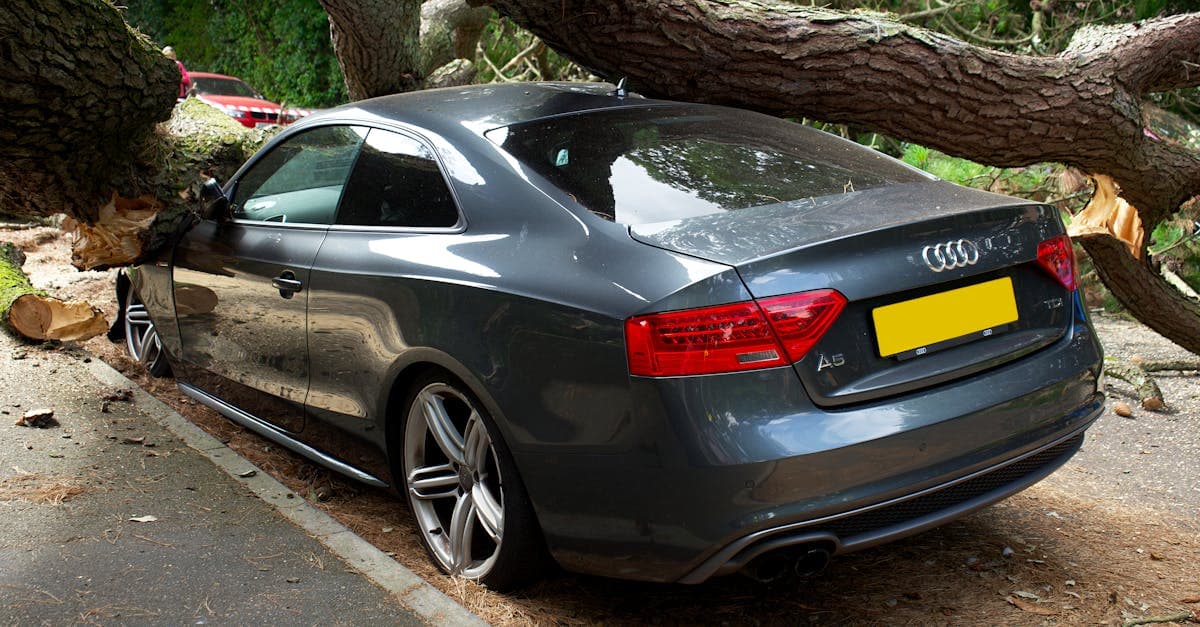
Other covered events: Comprehensive also covers fire damage (including wildfires and vehicle fires), falling objects such as tree branches and construction debris, civil disturbance and riot damage, glass breakage, and damage from missiles or flying objects kicked up from the road. The unifying principle is that these events are outside the driver's control.
Fire Damage and Comprehensive Insurance
When we analyze the data, Vehicle fires can result from mechanical failure, arson, wildfire exposure, or electrical malfunction. Regardless of the cause, fire damage to your vehicle is covered under comprehensive insurance — making this coverage particularly important in wildfire-prone regions.
Mechanical fire coverage: If an engine fire, fuel system failure, or electrical short circuit ignites your vehicle, comprehensive covers the resulting damage. The insurer will investigate the cause, particularly for newer vehicles, to determine whether a manufacturer defect or recall applies. If a defect is responsible, the insurer may pursue subrogation against the manufacturer.
Wildfire coverage: As wildfires become more frequent and widespread, comprehensive claims from wildfire exposure have increased dramatically. Your vehicle does not need to be directly engulfed — radiant heat from a nearby wildfire can melt plastic components, crack glass, and destroy paint. Even smoke and ash exposure can cause significant cosmetic damage.
Arson and criminal fire: If your vehicle is deliberately set on fire by another person, comprehensive covers the damage. You will need to file a police report and the insurer will conduct an investigation. If the investigation determines the policyholder was involved in setting the fire, the claim will be denied and referred for criminal prosecution.
Explosion coverage: Comprehensive also covers damage from explosions near your vehicle, whether from industrial accidents, gas leaks, or other sources. The concussive force and resulting debris are treated as a comprehensive peril.
Total loss from fire: Vehicle fires frequently result in total loss declarations because heat damage compromises structural integrity even when the fire is extinguished quickly. If your vehicle is totaled by fire, the insurer pays actual cash value minus your deductible, and you surrender the vehicle and its title.
Filing a Comprehensive Insurance Claim
The statistics paint a clear picture. When a comprehensive event damages your vehicle, the claims process follows specific steps. Moving through them efficiently helps you get your vehicle repaired or replaced as quickly as possible.
Step one — ensure safety and document the scene: Before worrying about insurance, ensure everyone's safety. Then document the damage thoroughly with photographs from multiple angles. Capture wide shots showing the overall damage context and close-ups of specific damage areas. If the event is weather-related, photograph the conditions. If theft or vandalism occurred, note the time you discovered the damage.
Step two — file a police report if applicable: For theft, vandalism, hit-and-run while parked, and civil unrest damage, file a police report immediately. Many insurers require a police report for these claim types. Even for weather damage, a police report creates an official record that can support your claim.
Step three — contact your insurer: Report the claim to your insurance company as soon as possible. Most insurers have 24-hour claim reporting by phone and online. Provide the basic facts: what happened, when, where, and the extent of damage. You will receive a claim number and instructions for next steps.
Step four — work with the adjuster: The insurer assigns an adjuster to evaluate your damage. For minor claims, a virtual assessment through photos or video may suffice. For significant damage, an in-person inspection may be required. Provide all documentation, photographs, and the police report to the adjuster.
Step five — authorize repairs or accept settlement: For repairable damage, the adjuster approves a repair estimate. You may use the insurer's preferred shop or choose your own. For total losses, the adjuster presents a settlement based on actual cash value. You can negotiate if you believe the valuation is too low. Once you agree, the payment is issued minus your deductible.
Comprehensive Insurance and Gap Coverage
When we analyze the data, Gap insurance fills a critical hole that comprehensive insurance alone cannot cover: the difference between what your vehicle is worth and what you owe on it. Understanding how these two coverages interact is essential for any driver with a vehicle loan or lease.
The gap explained: When your vehicle is totaled under a comprehensive claim, the insurer pays actual cash value minus your deductible. If your vehicle is worth $18,000 and you owe $22,000 on your loan, comprehensive pays $18,000 (minus deductible) and you still owe $4,000 to your lender. Gap insurance pays this $4,000 difference.
When the gap is largest: The gap between loan balance and vehicle value is typically largest in the first two to three years of ownership. New vehicles depreciate rapidly while loan balances decrease slowly, especially with long loan terms or low down payments. Drivers with 72-month or 84-month loans are particularly vulnerable to this gap.
Who needs gap coverage: Consider gap insurance if you made a small or no down payment, have a long loan term (more than 60 months), rolled negative equity from a previous vehicle into your current loan, or are leasing. If your loan balance is already below your vehicle's market value, gap insurance provides no benefit.
Where to buy gap insurance: Gap coverage is available from your auto insurer as a policy endorsement, from your lender at the time of purchase, or from standalone gap insurance providers. Insurer endorsements are typically the most affordable option, costing $20 to $40 per year. Dealer-sold gap insurance is often significantly more expensive.
Loan/lease payoff coverage: Some insurers offer a variation called loan or lease payoff coverage that pays a set percentage (usually 25 percent) above actual cash value rather than the full loan balance. This is less comprehensive than true gap insurance but is more affordable and may provide sufficient protection depending on your equity position.
Aftermarket Modifications and Comprehensive Coverage
The statistics paint a clear picture. If you have invested in custom wheels, performance parts, upgraded audio systems, or other aftermarket modifications, your standard comprehensive insurance may not cover their full value. Understanding this gap helps you protect your entire vehicle investment.
Standard policy limitations: Most standard comprehensive policies cover the vehicle as manufactured — factory equipment and standard features. Aftermarket modifications that add value beyond the factory configuration may not be included in your coverage unless you specifically notify your insurer and add appropriate endorsements.
Custom parts and equipment endorsements: Many insurers offer endorsements that extend comprehensive coverage to aftermarket modifications. These endorsements typically require you to list the modifications and their value, and they add a modest premium based on the added coverage amount. Coverage limits for these endorsements commonly range from $1,000 to $5,000 or more.
What qualifies as aftermarket: Custom wheels and tires beyond factory specifications, performance exhaust systems, suspension modifications, aftermarket audio and electronics, custom paint and wraps, interior modifications, and performance engine upgrades all fall outside standard comprehensive coverage. Even seemingly minor modifications like aftermarket grille inserts or lighting upgrades may not be covered.
Documentation requirements: Photograph all modifications, retain receipts and installation records, and keep an updated list of aftermarket parts and their value. This documentation is essential for supporting a comprehensive claim that involves modified components. Without proof of the modification and its cost, the insurer will default to factory equipment values.
Modification impact on vehicle value: Some modifications increase your vehicle's value while others decrease it. The insurer's comprehensive payout is based on the vehicle's actual cash value, which may or may not reflect your modification investment. Discuss this with your agent to understand how your specific modifications affect your coverage.
Weather Damage and Comprehensive Coverage
The statistics paint a clear picture. Weather events represent the external attacks that target your vehicle regardless of how carefully you operate it — forces that can destroy a vehicle without any driver involvement. Comprehensive insurance covers virtually all weather-related damage, making it essential for drivers in areas prone to severe weather.
Hail damage: Hail is the single most common weather-related comprehensive claim. A single hailstorm can damage thousands of vehicles simultaneously, with repair costs ranging from a few hundred dollars for minor dents to several thousand for severe panel damage and broken glass. Paintless dent repair has become the standard technique for hail claims, reducing repair time and cost.
Flood damage: If rising water submerges your vehicle — whether from a hurricane, heavy rain, or overflowing waterway — comprehensive covers the damage. Flood damage often results in total loss declarations because water infiltration can destroy engines, electronics, and interior components beyond economical repair. Never attempt to start a flood-damaged vehicle before professional assessment.
Wind and tornado damage: High winds can damage vehicles by rolling them, propelling debris into them, or collapsing structures onto them. Tornado damage is covered regardless of severity. Even if your vehicle is carried and deposited elsewhere by a tornado, comprehensive pays for the damage.
Lightning strikes: A direct lightning strike or damage from a nearby strike that affects your vehicle's electrical system is a comprehensive claim. Modern vehicles with extensive electronics are particularly vulnerable to lightning-related damage, and repair costs can be substantial.
Ice and snow damage: Roof collapses from snow load, ice falling from structures onto your vehicle, and damage from freezing conditions are all comprehensive claims. However, damage from driving on icy roads — such as sliding into a ditch — is a collision claim.
Factors That Determine Your Comprehensive Premium
When we analyze the data, Comprehensive insurance premiums vary significantly based on factors specific to your vehicle, your location, and your policy choices. Understanding what drives your premium helps you find opportunities to reduce cost without sacrificing coverage.
Vehicle value: The most significant factor is your vehicle's value, because the insurer's maximum payout is the vehicle's actual cash value. More expensive vehicles cost more to insure comprehensively. A new luxury SUV might have a comprehensive premium three to four times higher than an older economy car.
Location and risk profile: Where you live and park determines your exposure to comprehensive perils. Drivers in areas with high vehicle theft rates, frequent hail storms, or flood risk pay more for comprehensive coverage. Urban areas with higher theft and vandalism rates typically have higher premiums than rural areas, though rural areas may have higher animal collision risk.
Deductible selection: As discussed earlier, your deductible choice directly affects your premium. Higher deductibles mean lower premiums because you absorb more of each claim cost. This is the most controllable factor in your comprehensive premium.
Claims history: Previous comprehensive claims can increase your premium, though the impact is typically less than collision or liability claims. Multiple comprehensive claims in a short period — such as two hail damage claims in consecutive years — will have a more noticeable effect.
Vehicle safety and anti-theft features: Vehicles with factory alarm systems, GPS tracking, and other anti-theft technology often qualify for comprehensive discounts. Similarly, vehicles stored in a garage rather than parked on the street may receive lower premiums because they face reduced exposure to weather and theft.
Take Action on Your Comprehensive Coverage Today
Understanding comprehensive insurance is only valuable if you act on that knowledge. Here is what to do right now.
First, pull out your auto insurance declarations page and confirm you have comprehensive coverage, what your deductible is, and what your premium costs. If you are not sure whether you have comprehensive, call your agent and ask.
Second, evaluate your deductible. Is it the right amount for your financial situation and your local risk environment? If you can comfortably afford a higher deductible, the premium savings may be worth the trade-off. If your area has high hail or theft risk, a lower deductible might make more sense.
Third, assess whether comprehensive coverage is still worth carrying based on your vehicle's current value. If your vehicle is worth less than $5,000 and you can afford to replace it from savings, the math may favor dropping comprehensive and pocketing the premium savings.
Comprehensive coverage is securing your vehicle against vulnerabilities outside your control. Getting the right amount at the right deductible optimizes both your protection and your premium. Take fifteen minutes this week to review your comprehensive coverage. The cost of that time is nothing compared to the potential cost of being incorrectly insured when a storm, thief, or deer changes your day.
Continue reading

Coverage Limits Compared: How to Spot the Differences Between Insurance Quotes
Two quotes with identical premiums can have vastly different coverage limits. Knowing how to identify and compare these limits ensures you select the policy that actually protects your assets.

Why Your Policy Renewal Date Is the Perfect Time for a Checkup
Your annual renewal notice is a natural prompt to review your coverage. Using renewal as your checkup trigger ensures you never go more than twelve months without evaluating your protection.

Assignment of Benefits and Water Damage Claims: A Common Scenario
Water mitigation companies frequently ask homeowners to sign AOBs after pipe bursts and floods. Learn why water damage claims are the most common setting for AOB agreements.